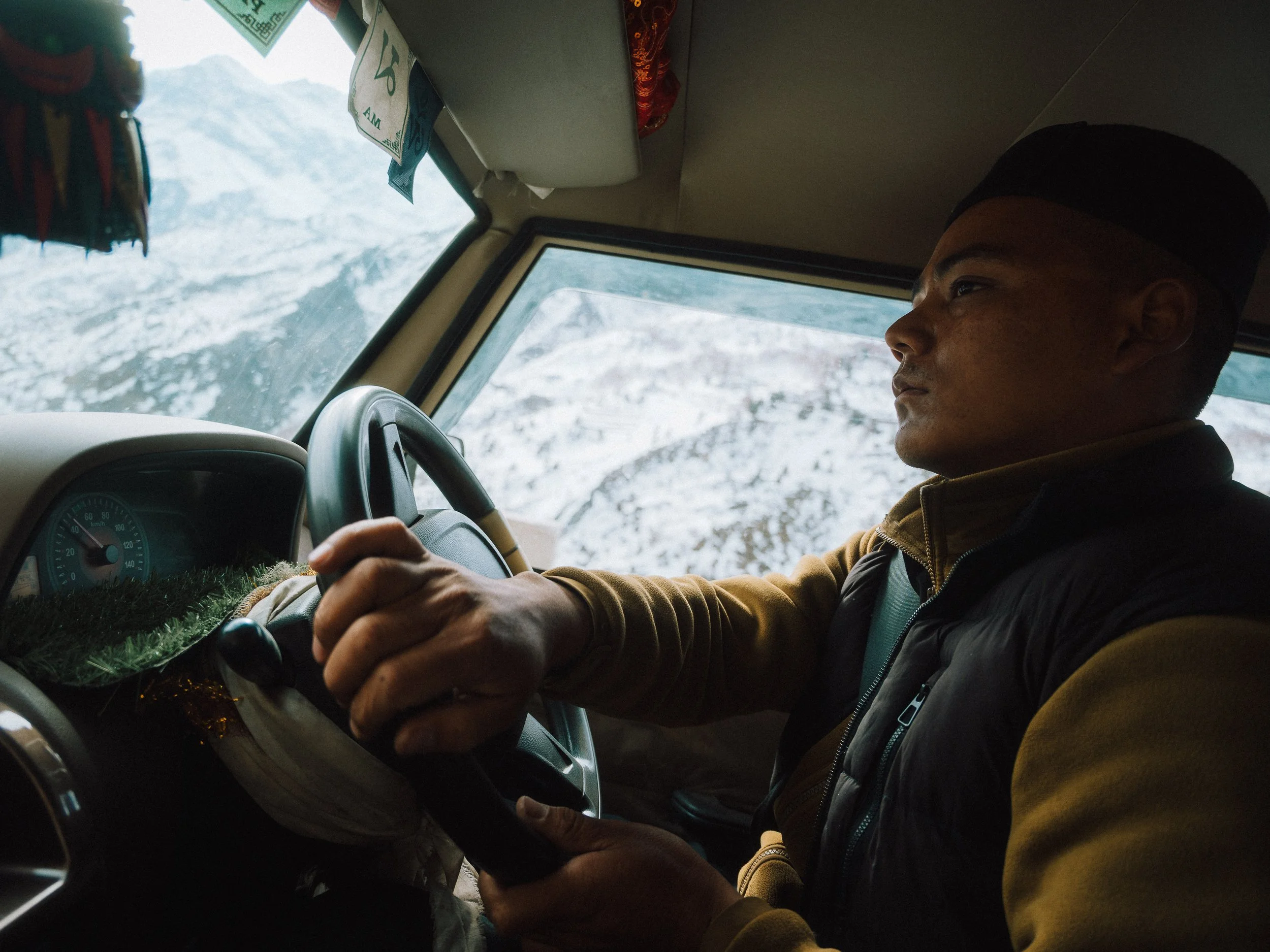
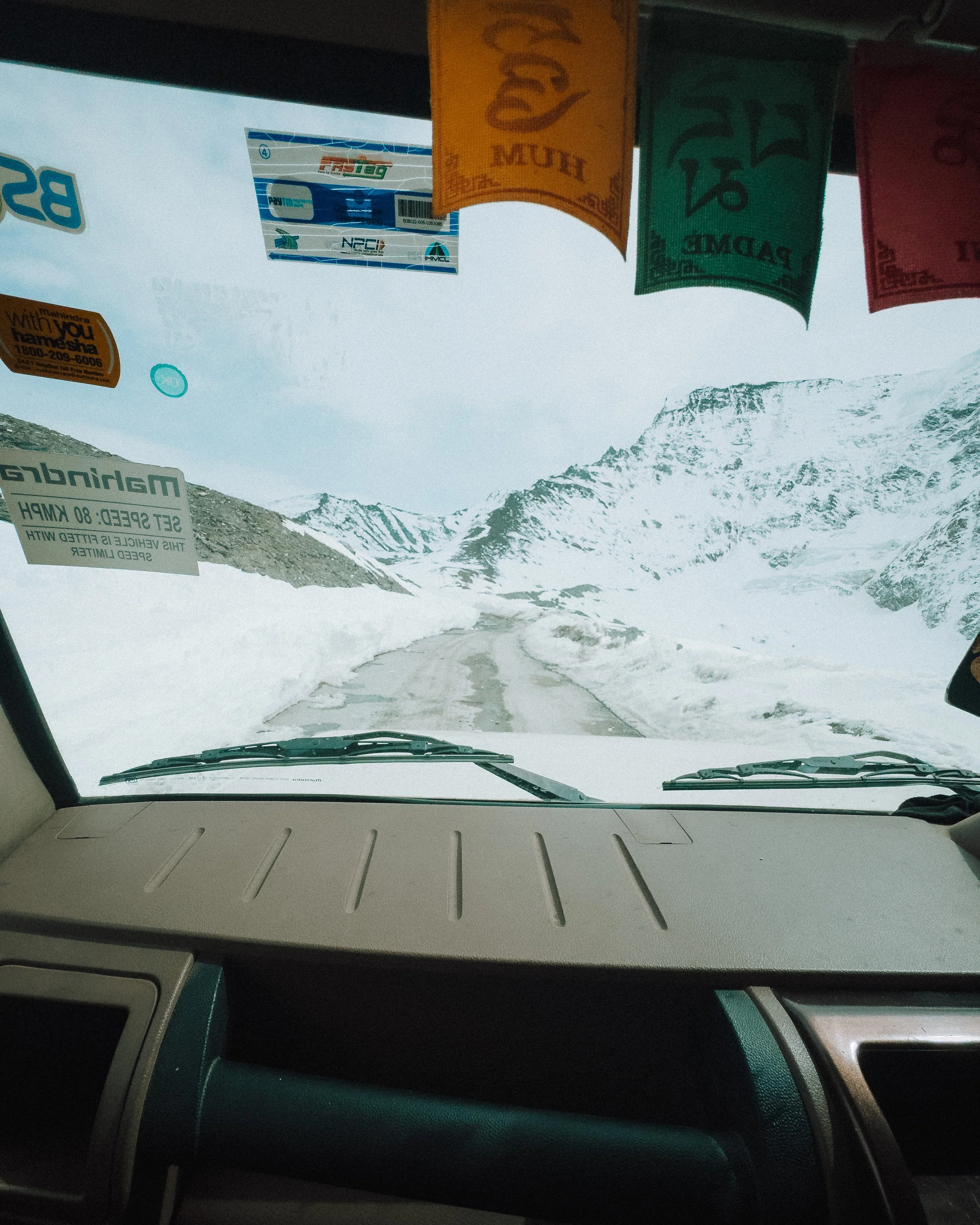
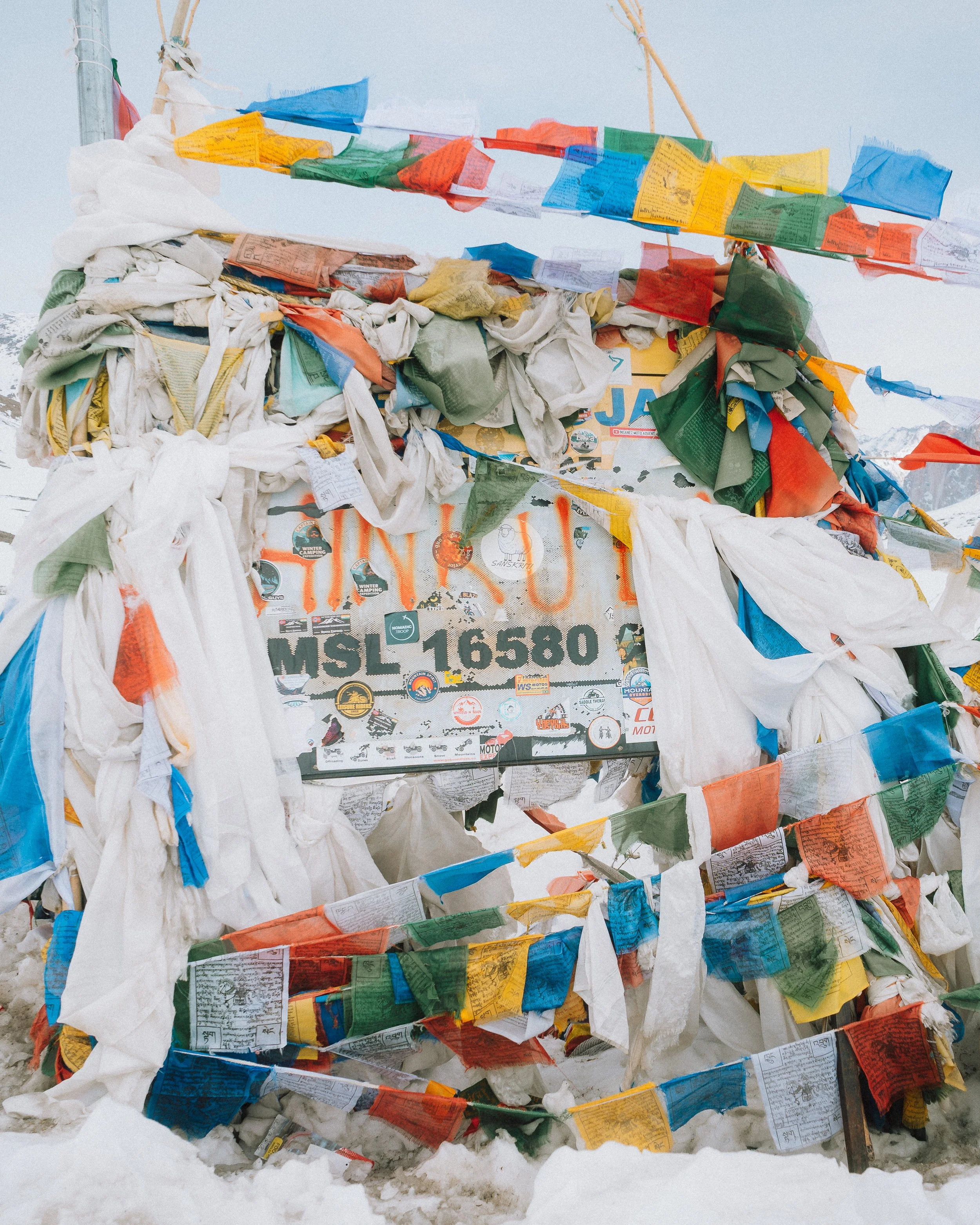
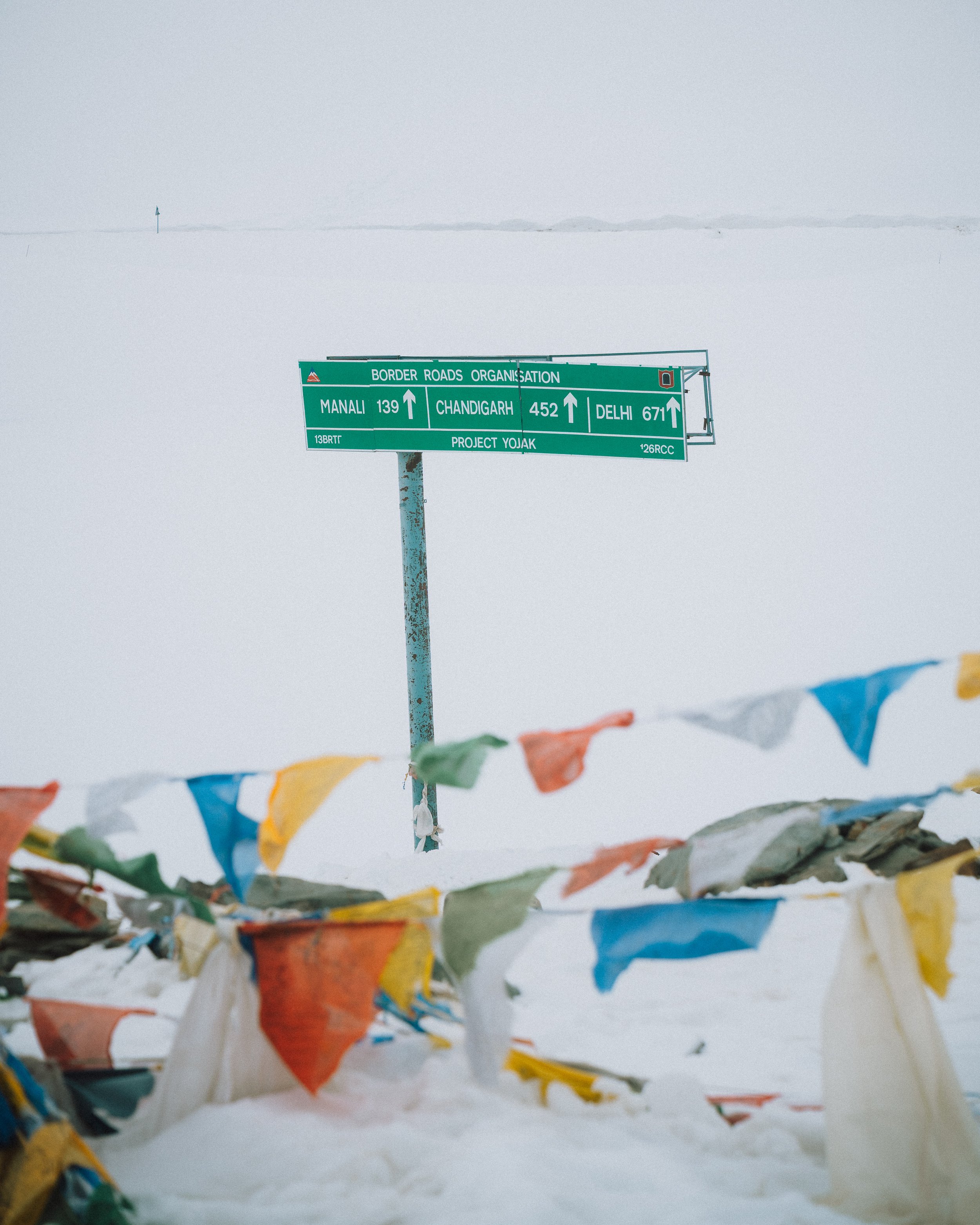
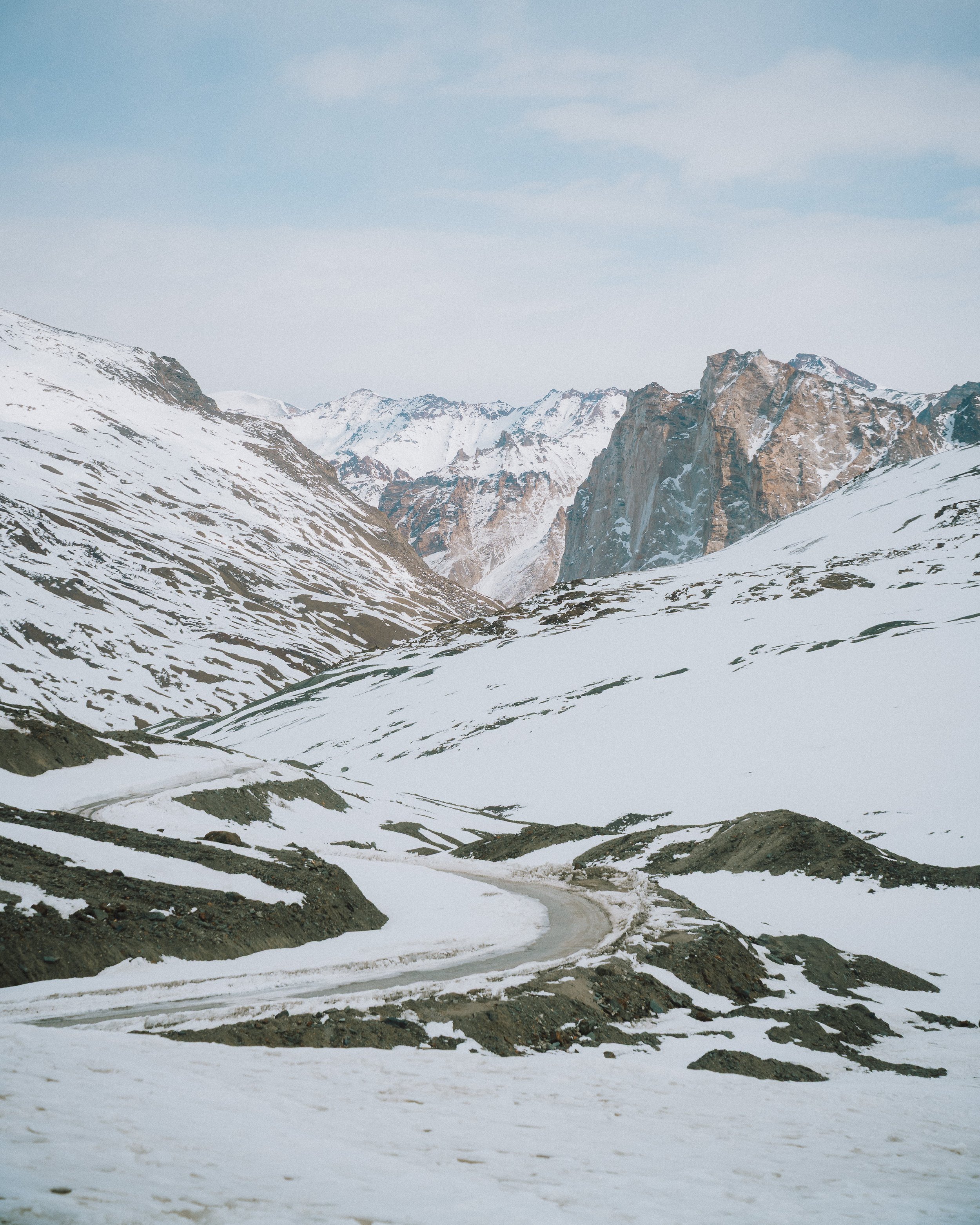
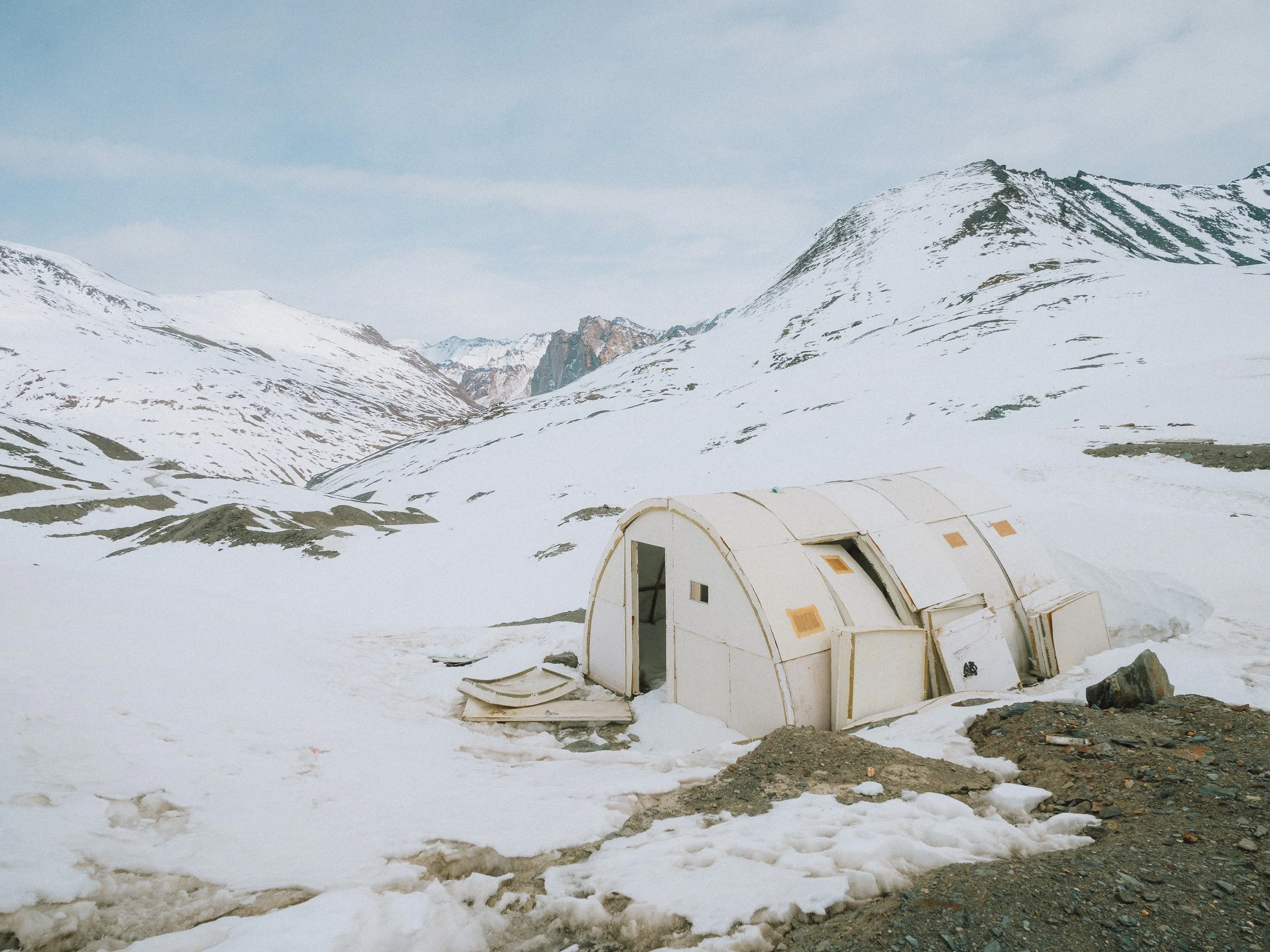
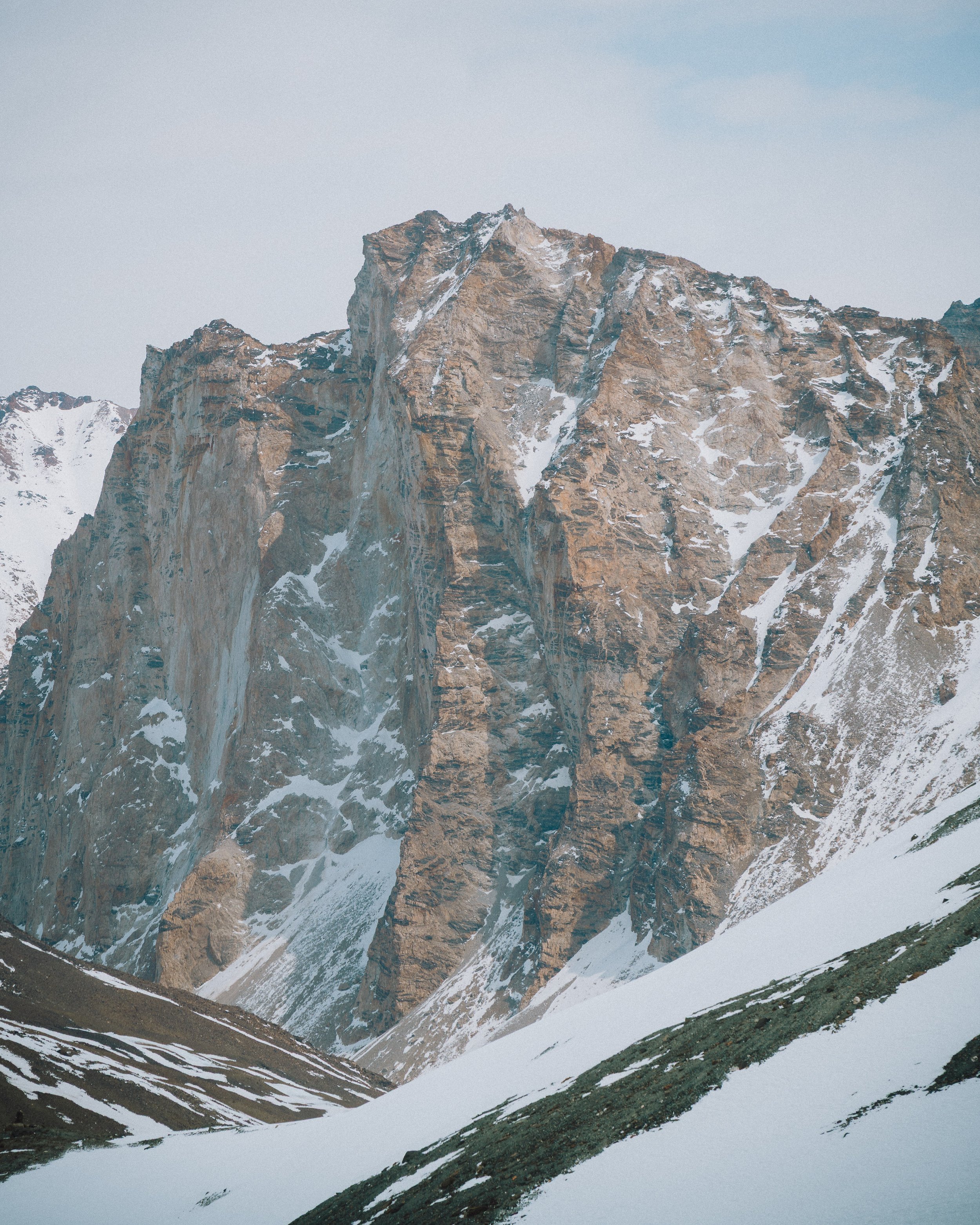
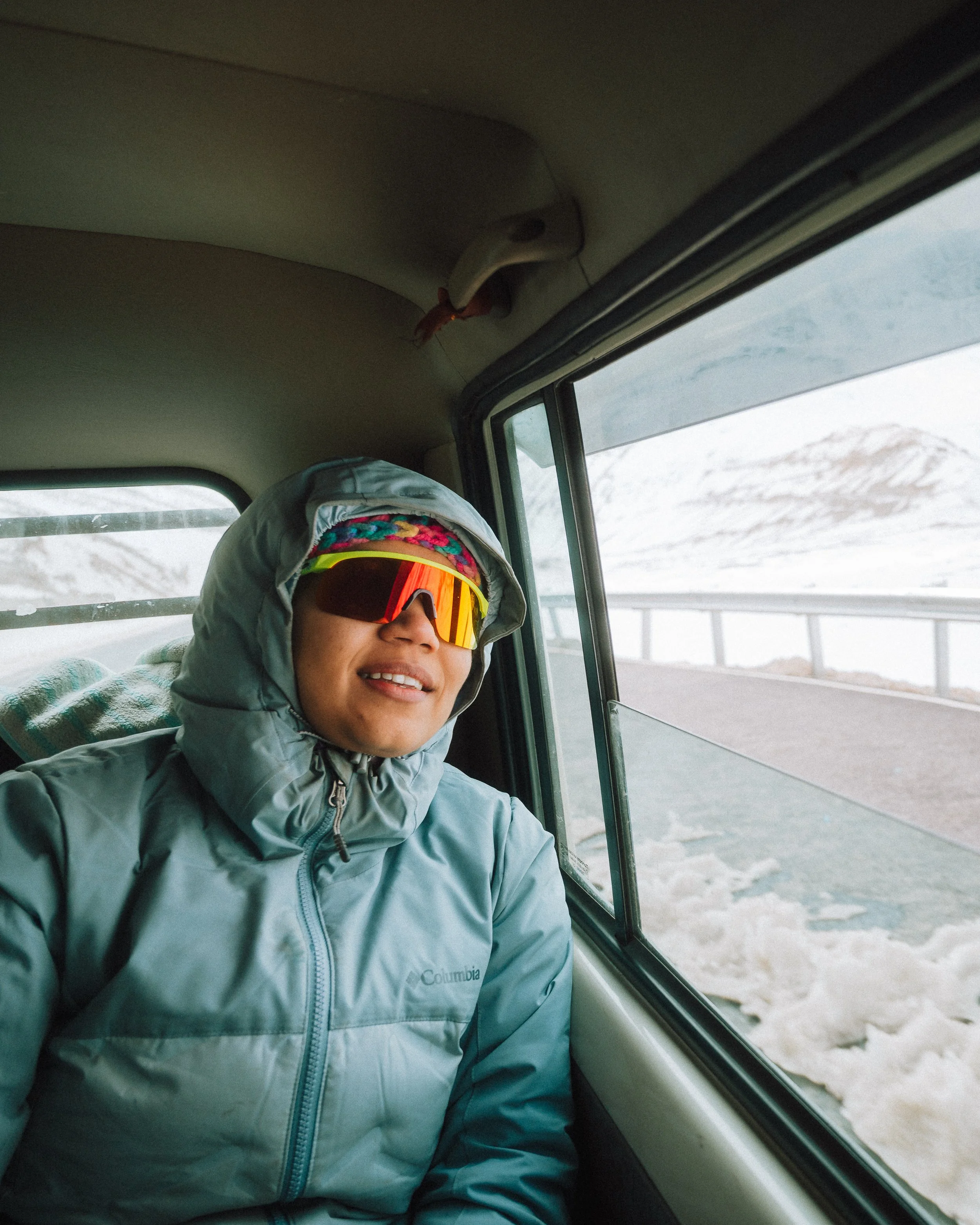
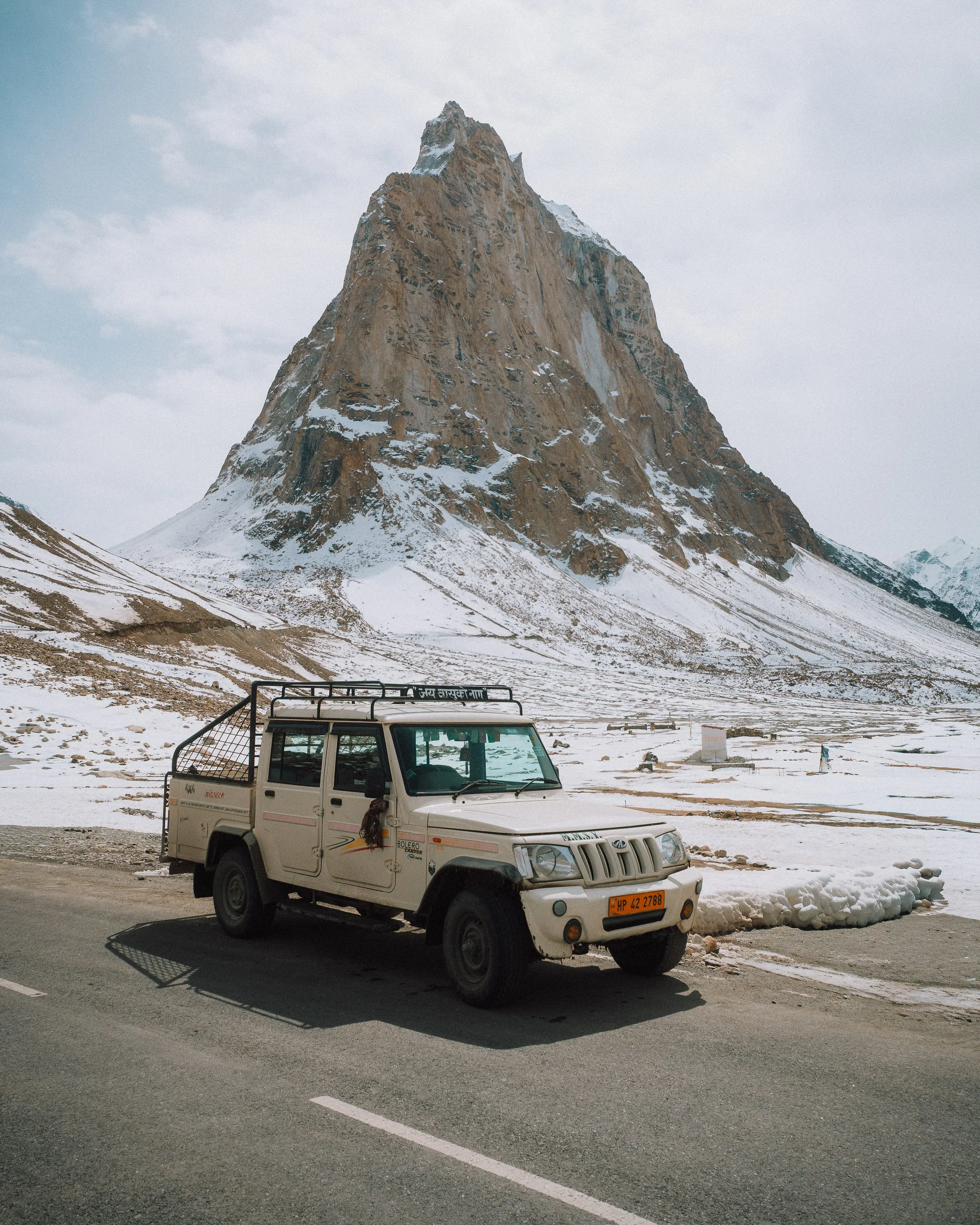
The next morning, we left Lahaul to head into an even more remote region. The journey itself already felt like an adventure. We packed our things into the 4x4 and set off with our driver towards Shinkula Top.
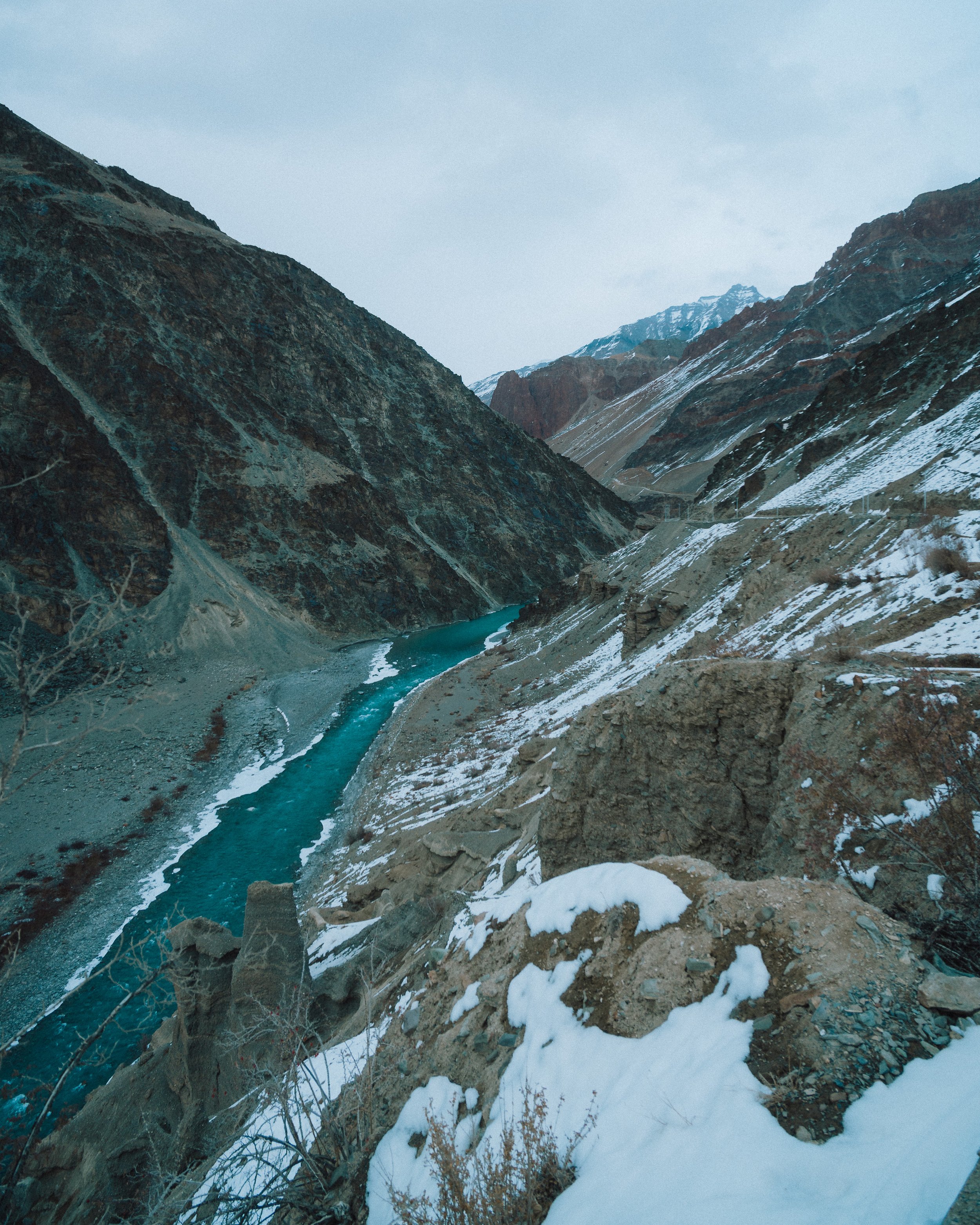
A mountain pass road that had only reopened to the public a few days after winter — and for now, only accessible to 4x4 vehicles. The effort that went into building and maintaining this road is hard to comprehend. Parts of it are built on a glacier and slowly shift downhill over time.
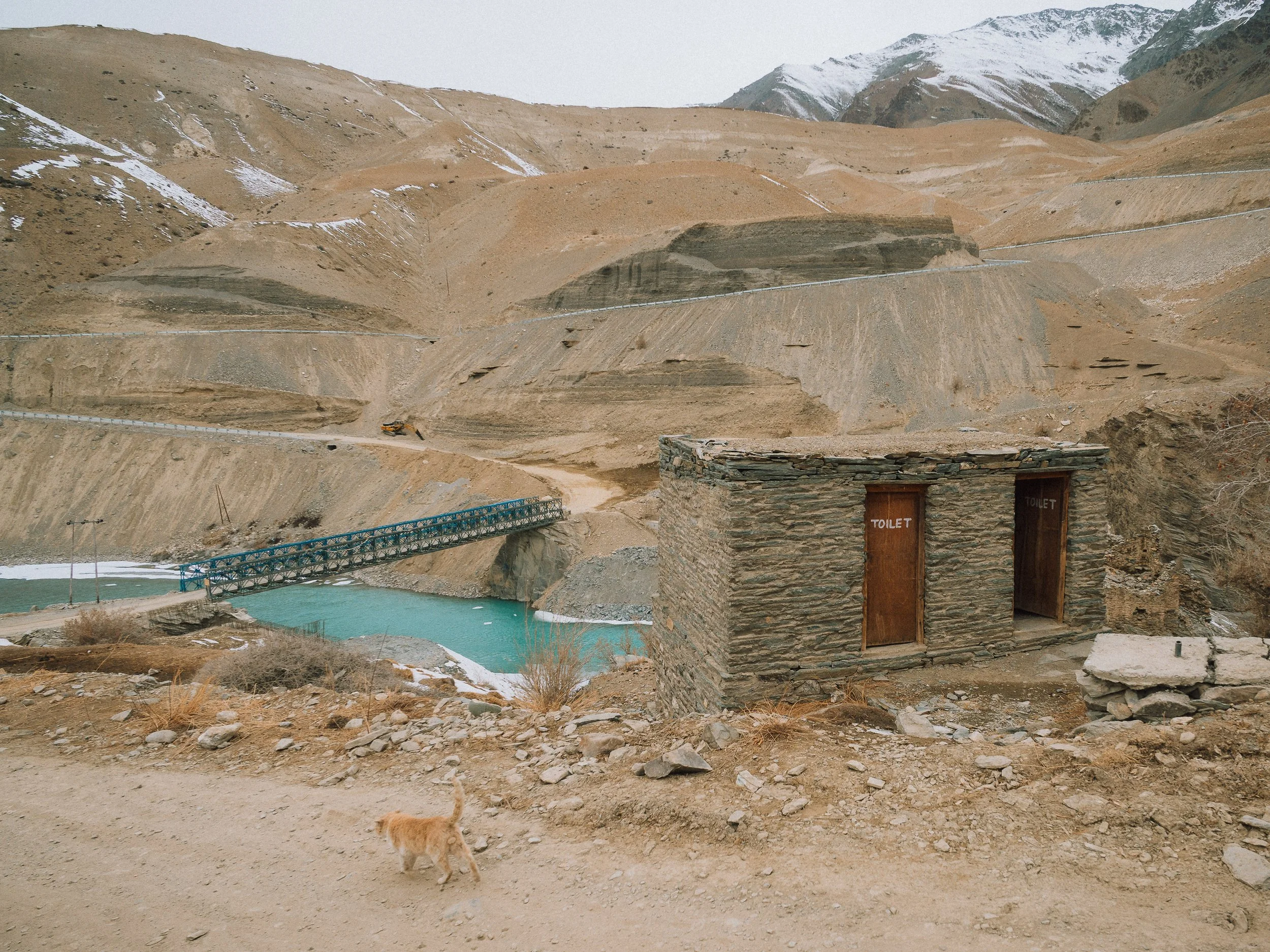
Along the way, there are drops of hundreds of meters right next to the road, sections that have collapsed with nothing more than a small pile of rocks as a “warning,” and even a massive steel bridge that has been completely displaced by a landslide.
The road climbed up to 5,091 meters — by far the highest altitude I’ve ever been at. No dizziness, no headaches. Shortness of breath, yes, but I think the nights in Lahaul had already helped a lot with acclimatization.
The top of the pass also marked the border to Ladakh, part of the Jammu and Kashmir region, whose territorial status has been disputed for years.
Once we reached the valley, we had to pass a military checkpoint, as the area is controlled by the army. After a bit of back and forth about whether I, as a German, was allowed to enter, we continued on to Purne.
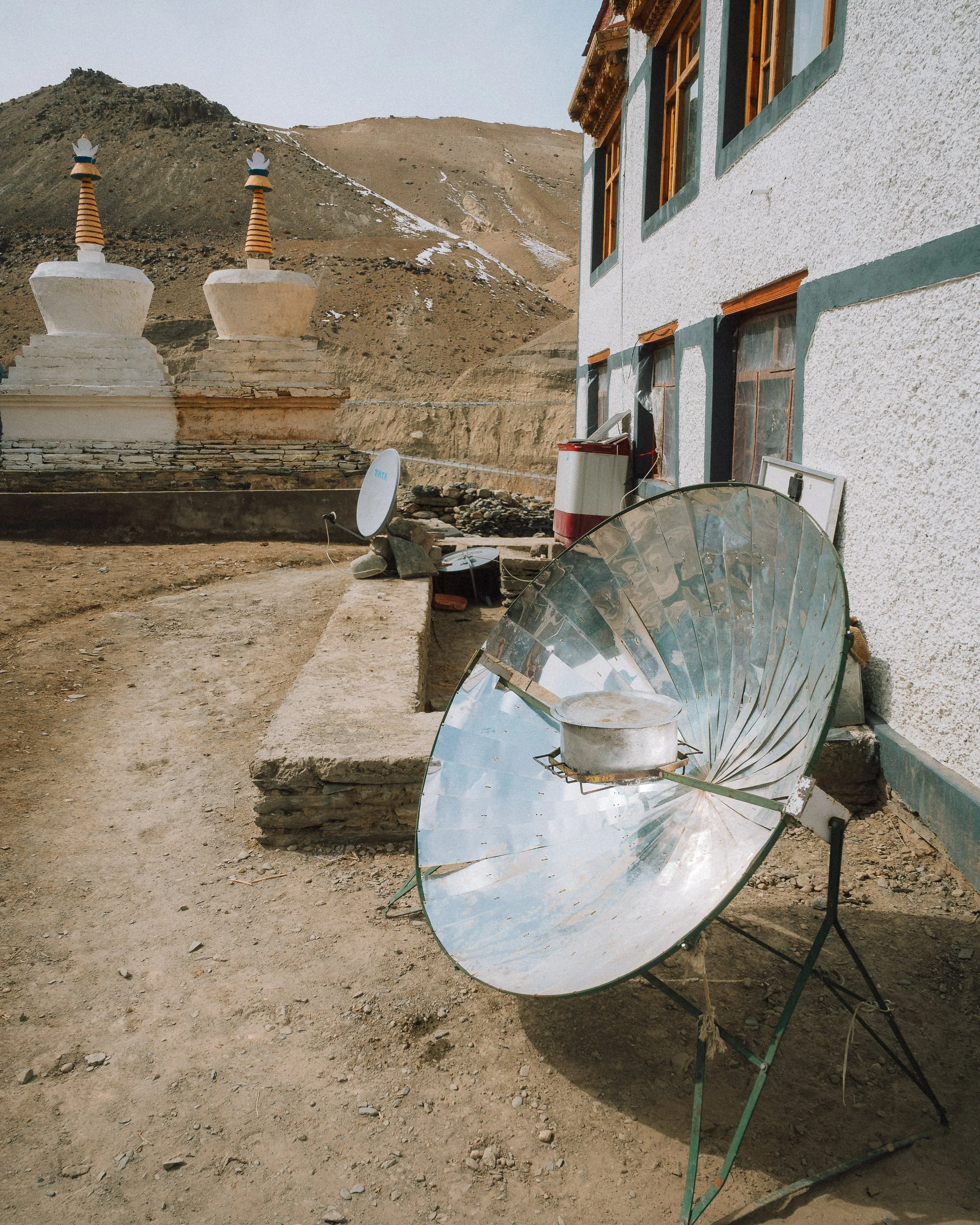
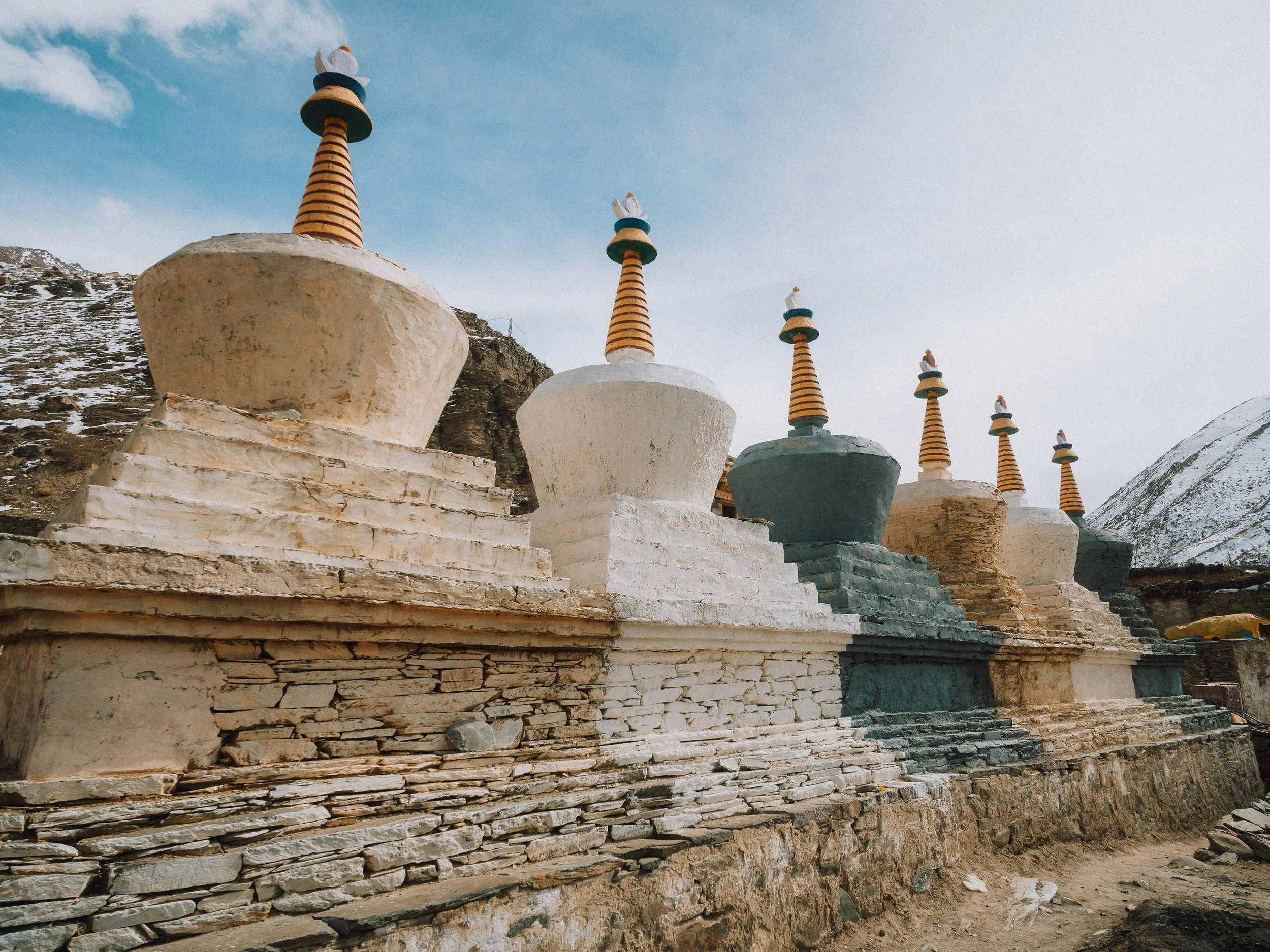
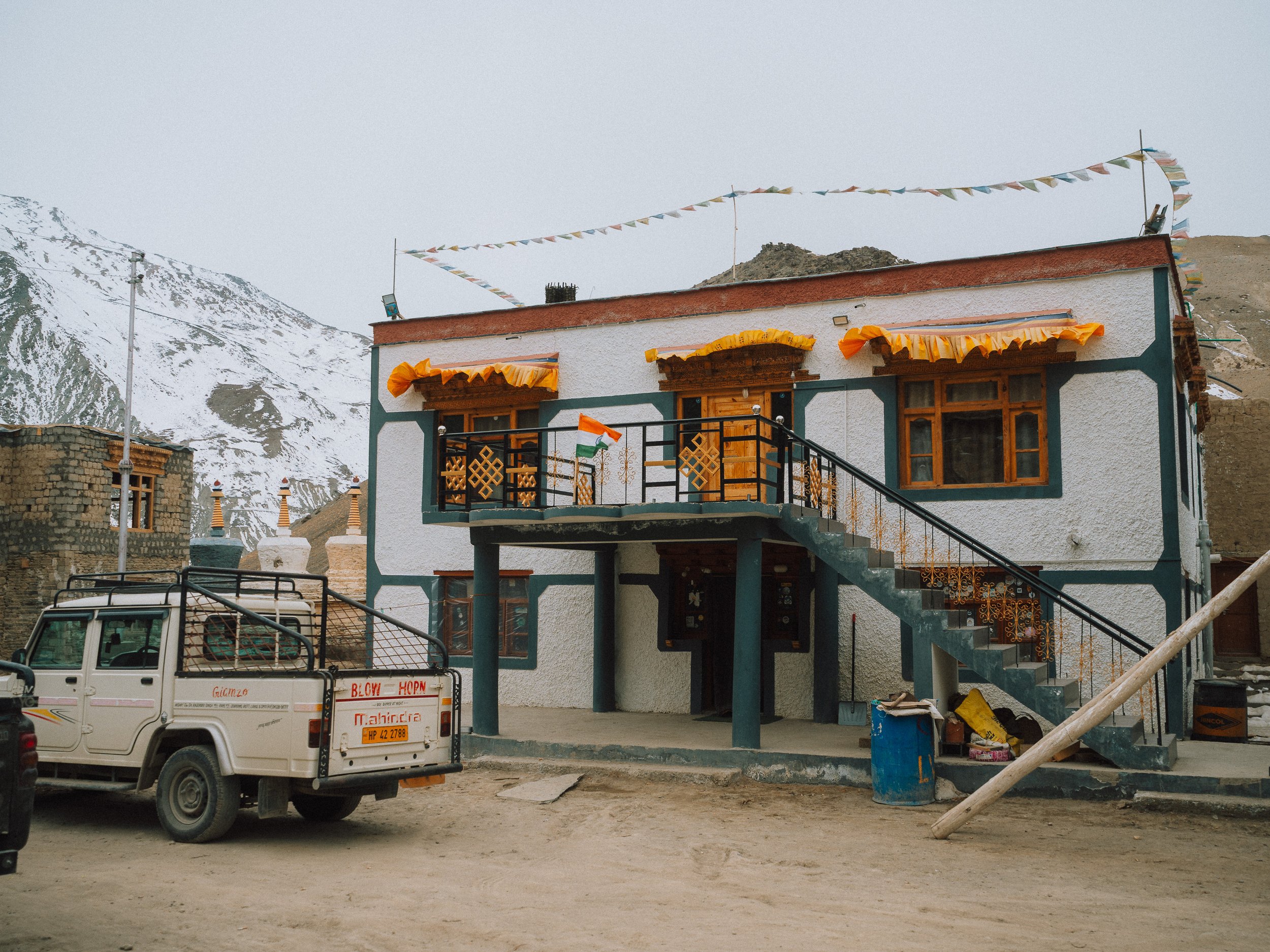
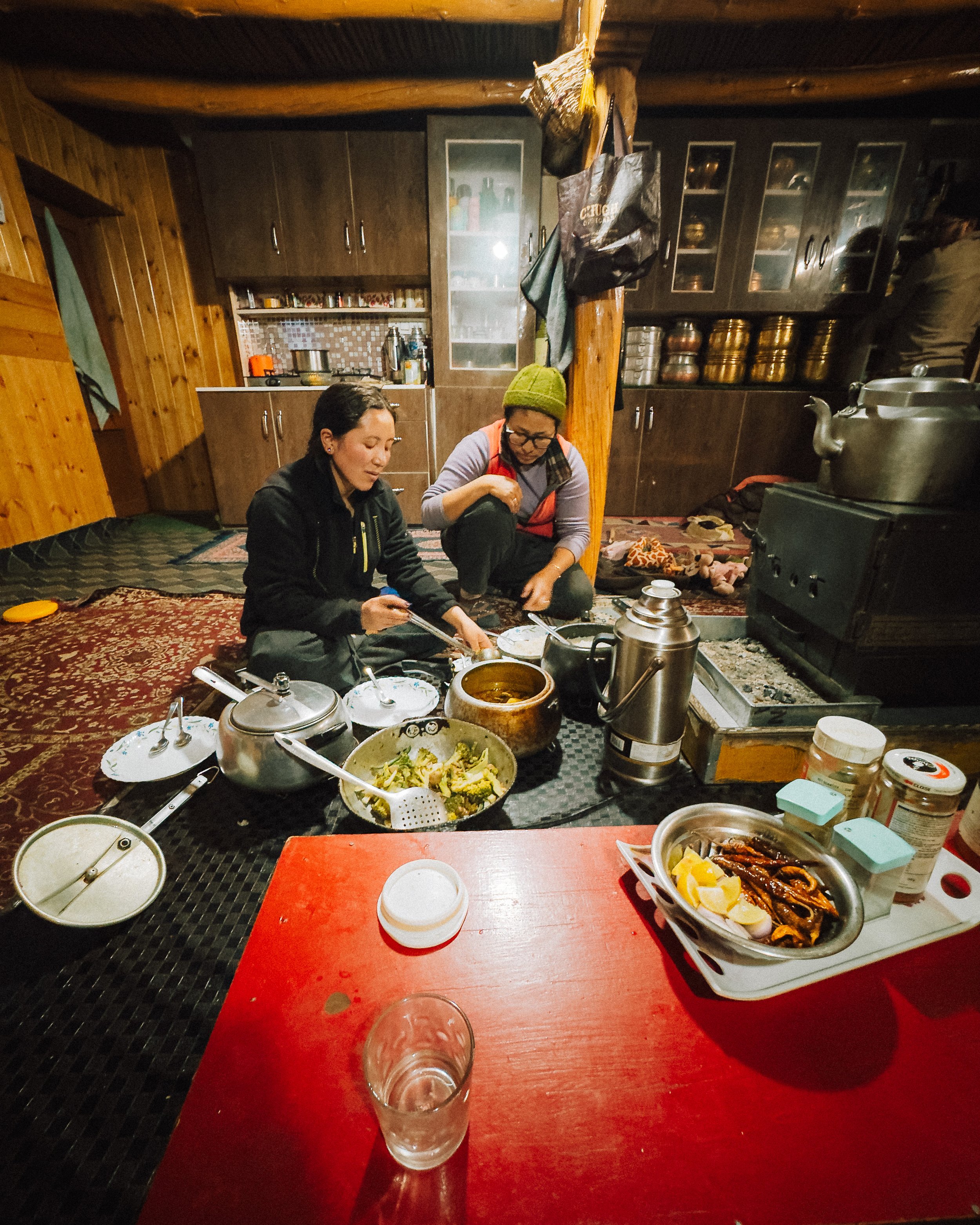
I wouldn’t even call it a village — it’s essentially just an inhabited guesthouse. Surrounded by raging mountain rivers and 6,000-meter peaks, there’s no running water, no internet, and the nearest town is hours away — and yet, it’s home to a young family.