What happens to the romance of travel when a country becomes your everyday life?
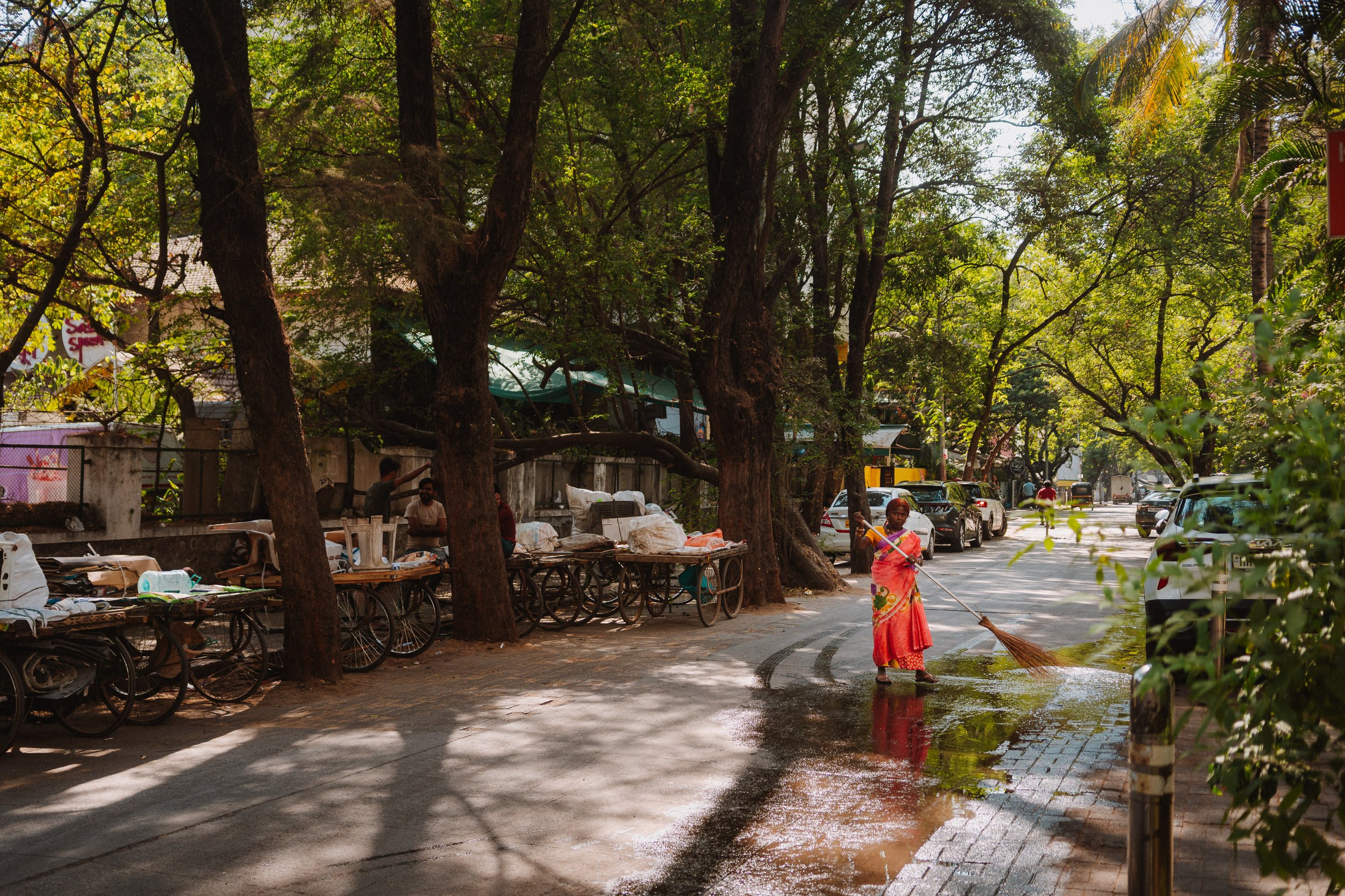
Koregaon Park, Pune
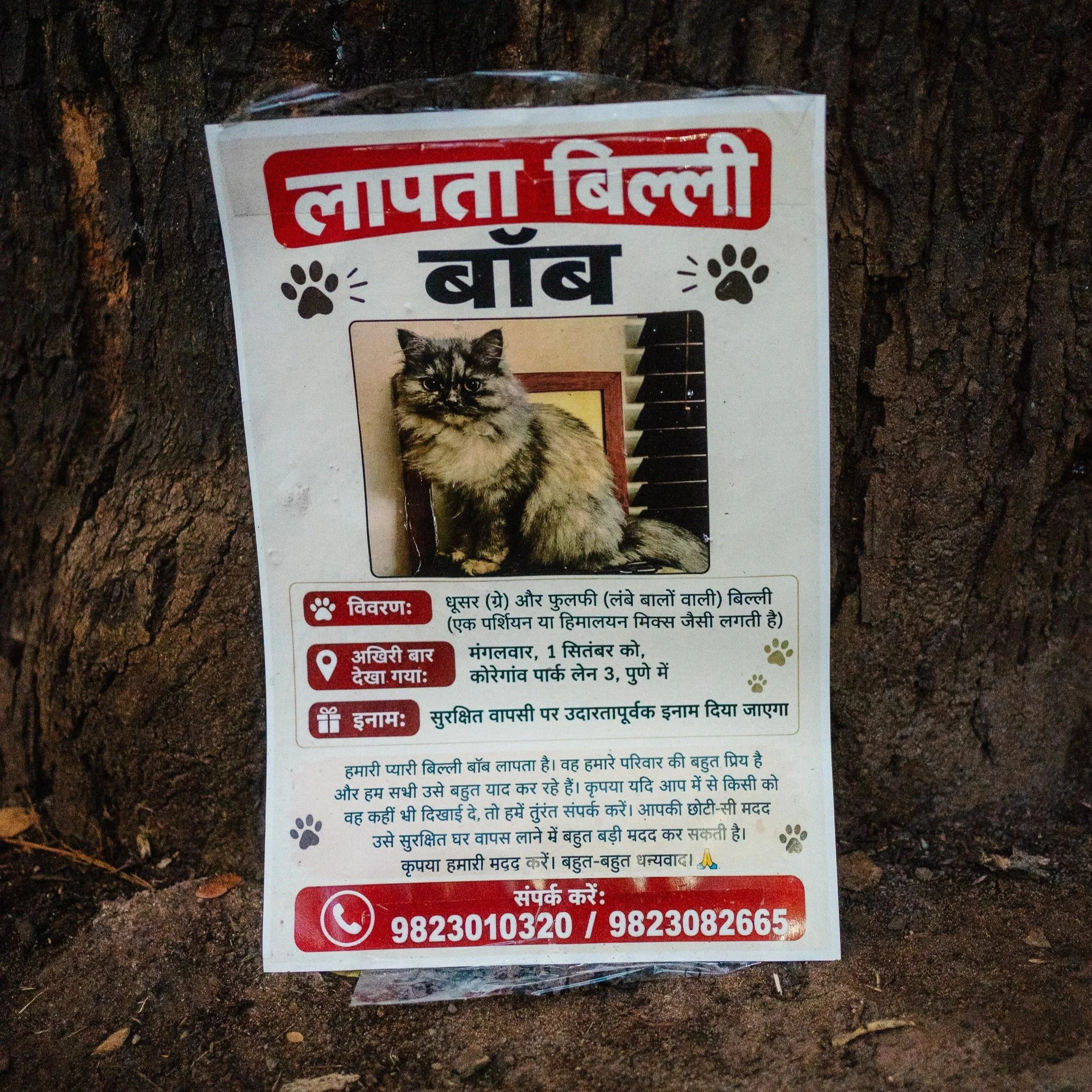
While running on our usual running lap in Koregaon Park, Pune, we saw a sign. It was in Hindi, but it hit me immediately. There was an image of a cat printed on it. If you print a sign with a cat on it, it means the same thing everywhere in the world: the cat is gone.
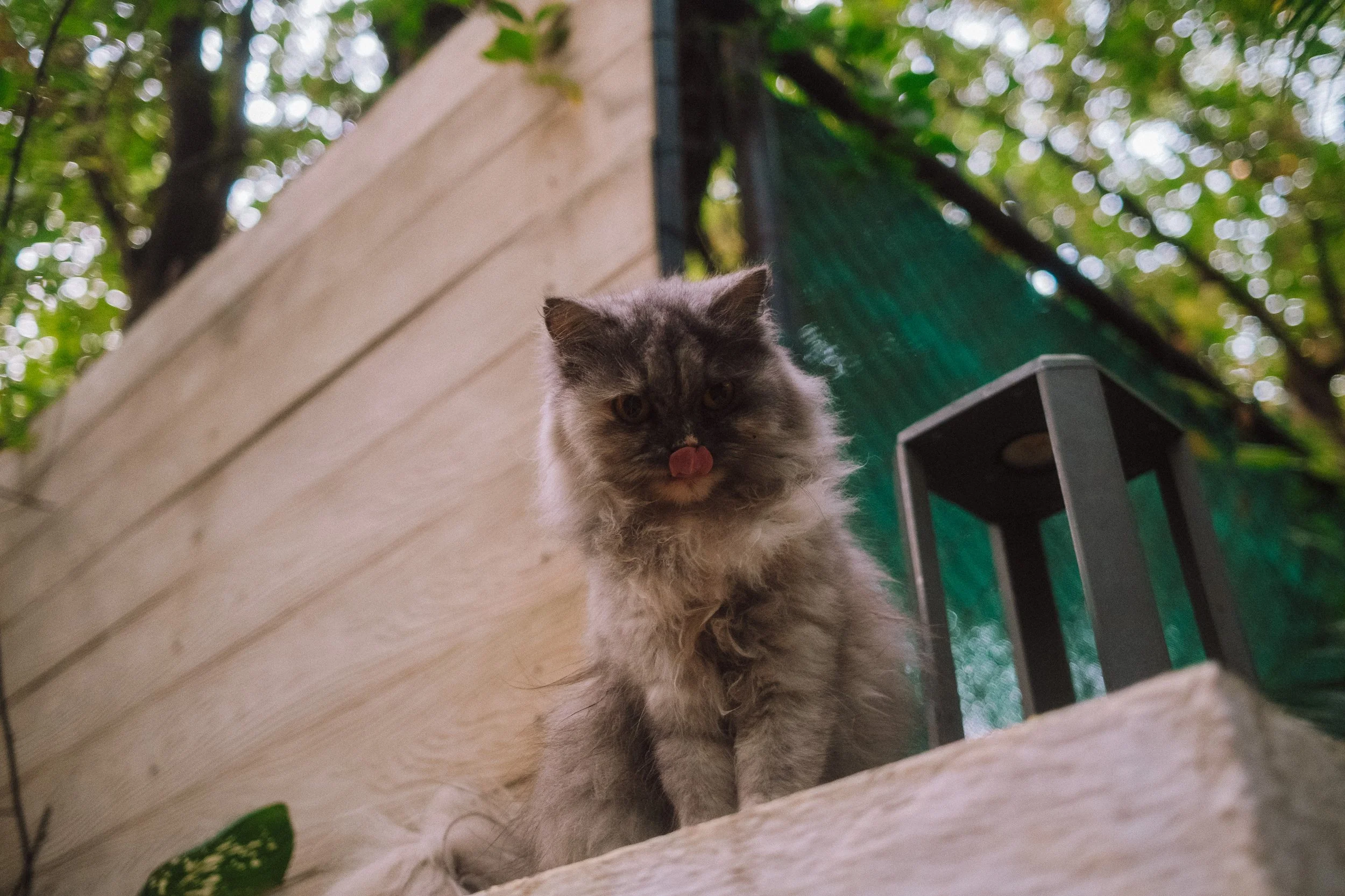
We knew this cat. We met him multiple times on our walks through our neighborhood. We scratched his back and rubbed his belly. He even came out of his walled society once we called from the street. Now Bob, that was apparently his name, has got lost.
Why am I telling you about this lost cat? Cats get lost every day, everywhere on the planet, but this hit me with a different thought. It sent me spiraling into thoughts about all the things I experienced in India in the last couple of months. Also, it made me realize how much my relationship with this country changed over time.
But before I get into that, let me get back to the beginning. I moved to India, Pune specifically, roughly one year ago, as an expat, working for a German company in mechanical engineering. Because of this, my perspective will be different than that of most people who either only stayed here for a short time or actually grew up here. Also, I am aware that my situation here comes from immense privilege and I moved here of my own free will. I simply try to answer my own question I had a year ago: How would my perspective change if I actually lived here and was not just a visitor?
The India I Had in Mind
Before even coming here, my perspective was quite defensive of India. I felt this country has a reputation problem. Whenever India came up in personal conversations, it was mostly only in a negative way. On social media, I saw constant plain racism, videos making fun of how dirty everything is or showing all the “scams” people encounter. It was basically just shock value and rage bait. There is a full economy around mostly white travel creators coming to India to film trash and bad hygiene. And no, I can spoil one thing: no one actually eats fucking Monster Energy omelettes here (but I would).
All this happens mostly at the expense of the poor in India. All these things had one thing in common: they were Western perspectives without any nuance. So naturally I thought: “It can’t be that bad; things will be much more different in reality.”
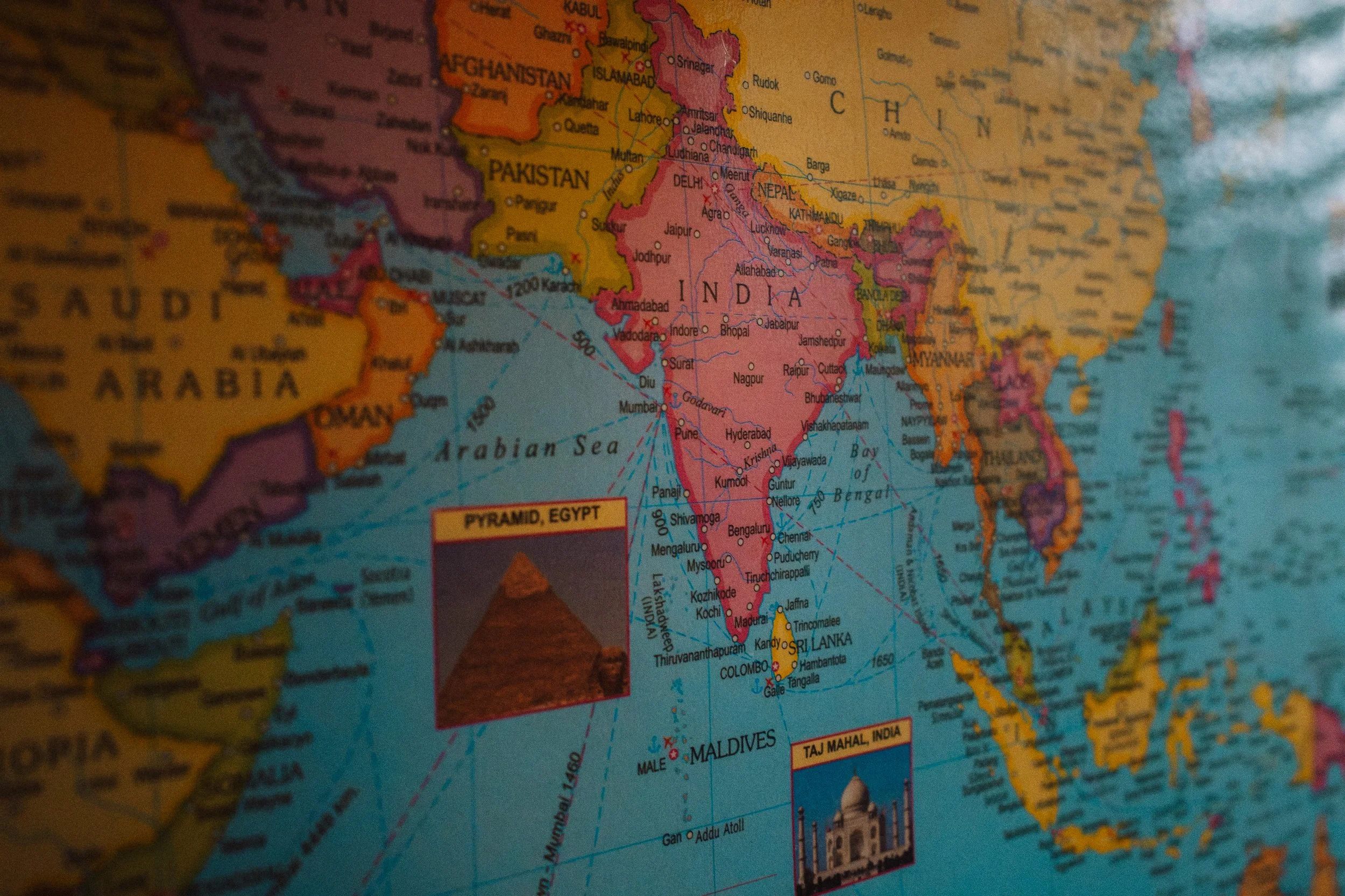
India always gave me a sense of adventure; from what I knew, it would be quite the opposite of my perceived normal. I remember travel vlogs I watched before I had the personal freedom to travel internationally. I saw it as a wild place that I would love to explore. To leave my comfort zone. There were cities like “Bombay” where the name of the city alone gave me a sense of travelling like in the “old times” before everything was as accessible and connected as today. I was definitely romanticizing it.
Still, I was aware of the immense hardship many people will have to go through on a daily basis, which I attributed to the colonial times when “my people”, the Western Europeans, formed the whole world in a way that would solely benefit them. But what I would learn later is that awareness and actually feeling it are not the same thing.
This Is My Life Now
I still remember my first arrival in Mumbai, what Bombay is officially called today. Men with turbans at every corner. Women wearing sarees. A fully new smell palette, sweeter and less sterile than an airport in Germany would smell. Getting out through the hectic luggage hall, only to be greeted with the soundscape of a megacity with 750 times as many people living there as in my own hometown in Germany.
Rickshaws dominating the inner cities, huge colorful trucks blocking the mountain road towards Pune. Even though I had been awake for 20 hours already, sleeping in the car would be impossible. Not only because of the potholes, but mostly because of the fascination I stared out of the window with.
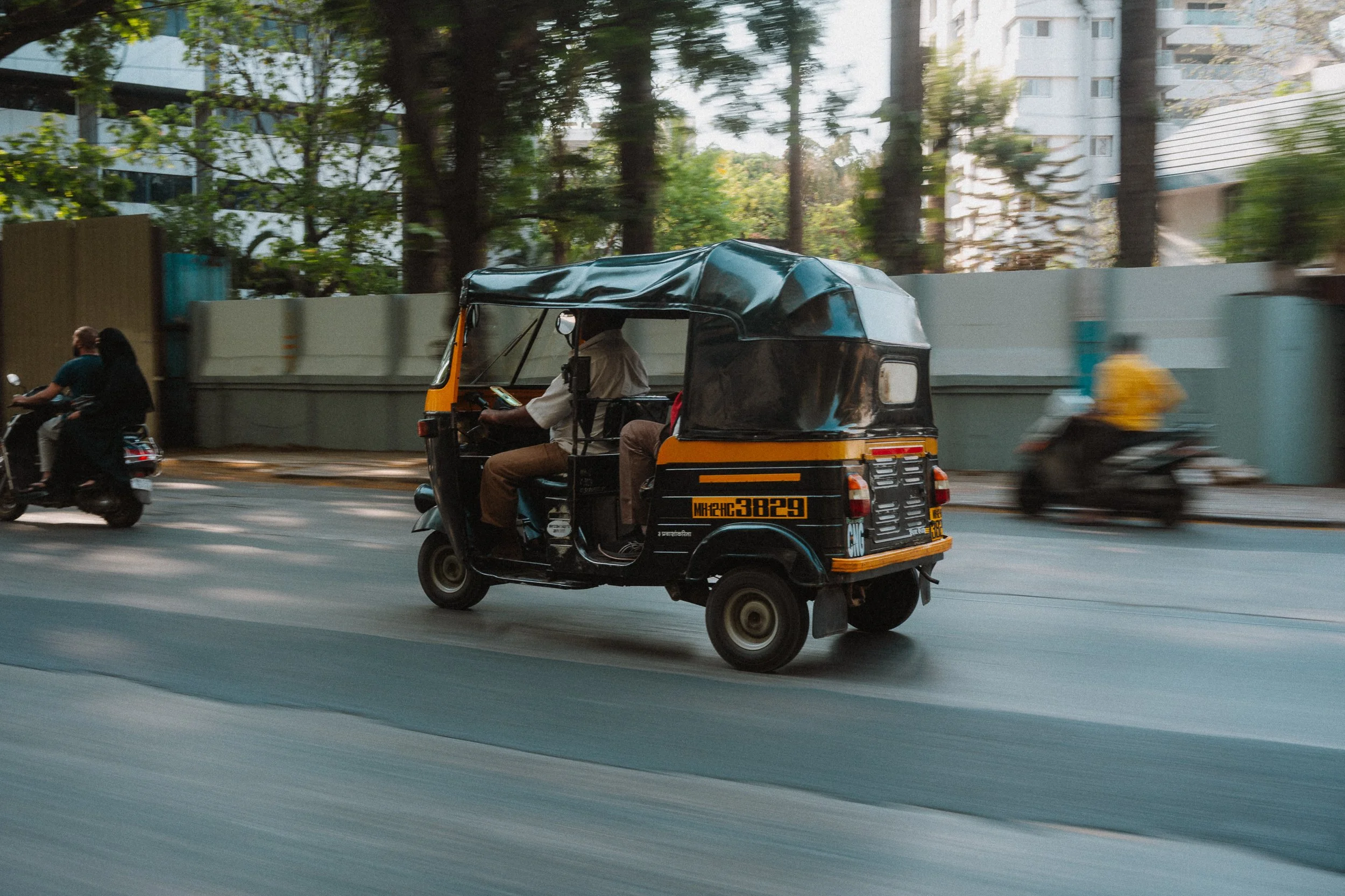
And this feeling stayed. Everything was interesting just because it was in India. Every road sign, every house, every person. A world that I only knew from media. It was not my first time in Asia; I had had a brief visit to Thailand before, but this was a rawer version.
Often I wandered around Pune without any specific goal, just exploring with my camera. In conversations, it was often about how things work on a surface level, how to get from A to B or how to order food. It was more about finding common things between India and Europe. Digging in conversations with friends into the known stereotypes to understand the reality behind them. Proving my own thesis that it’s not as bad as everyone says.
While the hardship was obvious and many things were not handled the way I would expect in Europe, two things were overpowering these thoughts.
The rush of simply being in these places full of chaotic energy. Often I stood still with the realization: “This is my life now, not another video I watch.” Finally the dream of truly experiencing the world without just being a visitor was real. Pune is my home.
What do I know? Do I want to be the judge? Do I want to be just another white guy from Europe who tells the rest of the world what’s right and wrong?
I wanted to give the benefit of the doubt. This state of mind stayed for at least the first 3-4 months. Some days I just walked down my own street nearly bursting with excitement just because I felt alive. But this would change soon.
The Night at the Cinema
Human nature is to adapt, to get used to things. The “new camera” I buy is just “my camera” after a few days, and the “new home” was just “home” after a couple of months. When my own excitement wore off and things were not new experiences but recurring experiences, I perceived reality differently.
While this was gradual, there was a moment when it tipped in the other direction. I think it was the experience of watching “Dhurandhar 2” in the cinema. I was there just because of the fact that everyone told me that I HAD to experience cinema in India.

For those who don’t know this movie, it is an action movie, telling the story of an undercover agent caught up in a personal revenge story within the conflict between India and Pakistan. Before the movie started, the national anthem of India played, and everyone is expected to rise from their seats (due to the usual delays, we missed it, but I was able to experience this at a later time). This fact alone makes me uncomfortable, but maybe that’s just the typical German broken relationship with patriotism. Then there came a disclaimer about how this movie is pure fiction basically and not based on real events. Then the movie started.
I will spare you a retelling or a full review of this movie because it’s not worth it. Simplified, it was the good guy fighting the bad guys, so just some typical action movie stuff, right? Okay, maybe a pseudo-intellectual cinema enjoyer like me is just not the target demographic. But this “fiction” movie kept mixing reality into it. The bad guys were fictional terrorists, based on real people who got killed in military operations in reality also. Continuously there were scenes with television news reporting about these killings. It gives a fictional background to real events and constructs a new reality. The violence is justified with emotions. Its underlying messaging can be interpreted in many ways. For me, I recognized that the line between “the terrorists” and Pakistan in general got blurred more throughout the movie. Like when, after a ridiculous God of War-like violence spectacle, the main villain finally dies, he is simply screaming “Pakistan!” Making a connection between terrorism and a whole nation, Muslims and other minorities that are already targeted in India anyways. Also it was glorifying a real-world leader, showing his policies as necessary steps in the fight against terror, while it’s much deeper than that (demonetization).
I could give more examples like this, but I will simply link to this article about the first movie if you want to read more. For me, even though I only understood snippets of the dialogue, it was clear enough in its language to present itself as a propaganda movie to me. What shocked me more, though, was the reaction of the crowd. People were cheering and giggling, not for the few wholesome moments, but for the fictional violence against real people with the excuse that they were the bad guys. I was disturbed by it not because I outright dislike gore but because of the context it was happening in. Afterwards, I was so shaken up that I had to discuss it. But most people just dismissed it as creative freedom and said that everyone would know that not all Pakistanis or Muslims are evil. Even if this is true now, what will the children think once they have grown up in this kind of media environment?
This was a blockbuster movie, a medium I understood, with storytelling techniques I recognized, unlike the social tensions around me that I was still trying to make sense of. Here I reached a point where I couldn’t give the benefit of the doubt anymore. The mechanisms of propaganda are not things that I can dismiss by saying “It’s a different culture” or “What does some white guy know?” What I had seen was colliding too much with my own values.
What I Could No Longer Ignore
After this, the covers were off. Reading more about the context and real-world background of Dhurandhar led to me learning about inner politics and other mechanisms in society and the economy. Not only on an intellectual level, but also through many firsthand experiences and personal stories of people that I love. I was no longer just a visitor; I understood more of the context in which the things around me happened.
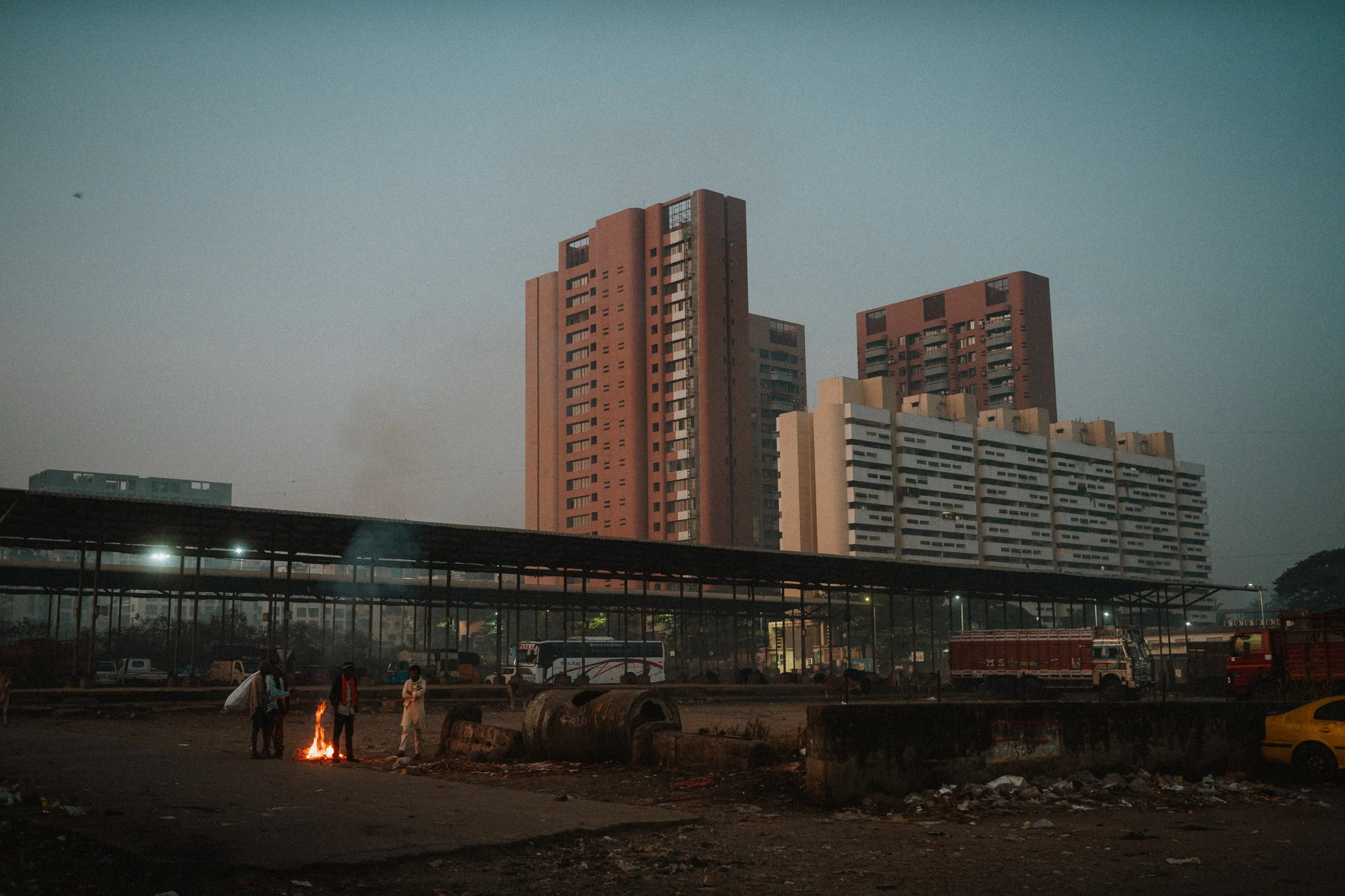
Maybe that initial benefit of the doubt was just ignorance to make me more comfortable with my own life choices. After all, I chose to be here. I wouldn’t let this once-in-a-lifetime experience turn into something so dark and negative. But now I can’t unsee these inequalities anymore. I could not stop recognizing the hostilities.
Things that I saw while travelling through India left a darkness in me that I won’t forget for the rest of my life. And then there is my own guilt of coming from “the West” where we are benefiting from these circumstances without blinking an eye. In Old Delhi, for example, I was visiting a public restroom which was so disgusting that I nearly vomited. It was built out of materials that are not really suited to be cleaned in the first place. The temperature was around 40 degrees. What was a restroom for most people was seemingly also the home of others. Outside I got swarmed by beggars, some of them with deformities that I thought had been solved by modern medicine since medieval times. I didn’t want to spend another second there; for others, it was their daily life.
This is only one of many examples, but I don’t want to go too deep into the shock value, since I criticized that exact thing earlier. I also don’t want to turn this into “Everything that’s wrong in India”. If you want to learn more about the why, you can watch this video which gives an easy-to-understand, well-researched Western perspective about the issues of modern-day India without simplifying it.
If you want to dig even deeper and hear it from an Indian perspective, I also read this book “Why the Poor Don’t Kill Us” by Manu Joseph. This gave me many perspectives which were very hard to grasp for me before.
How do you like India?
A question that I get asked frequently when I meet someone new is “How do you like India?” Earlier, my default answer was “I love it.” I would name the energetic chaos, the food, the people, the culture. Things a tourist would say.
If I get this question now, I don’t know what to say anymore. The chaotic places that made me feel alive make me feel frustrated and depressed now. I began to expect selfishness and indifference in everyday encounters. And “the culture”, while being so interesting to experience, is nothing that I can have a simplified positive opinion about anymore.
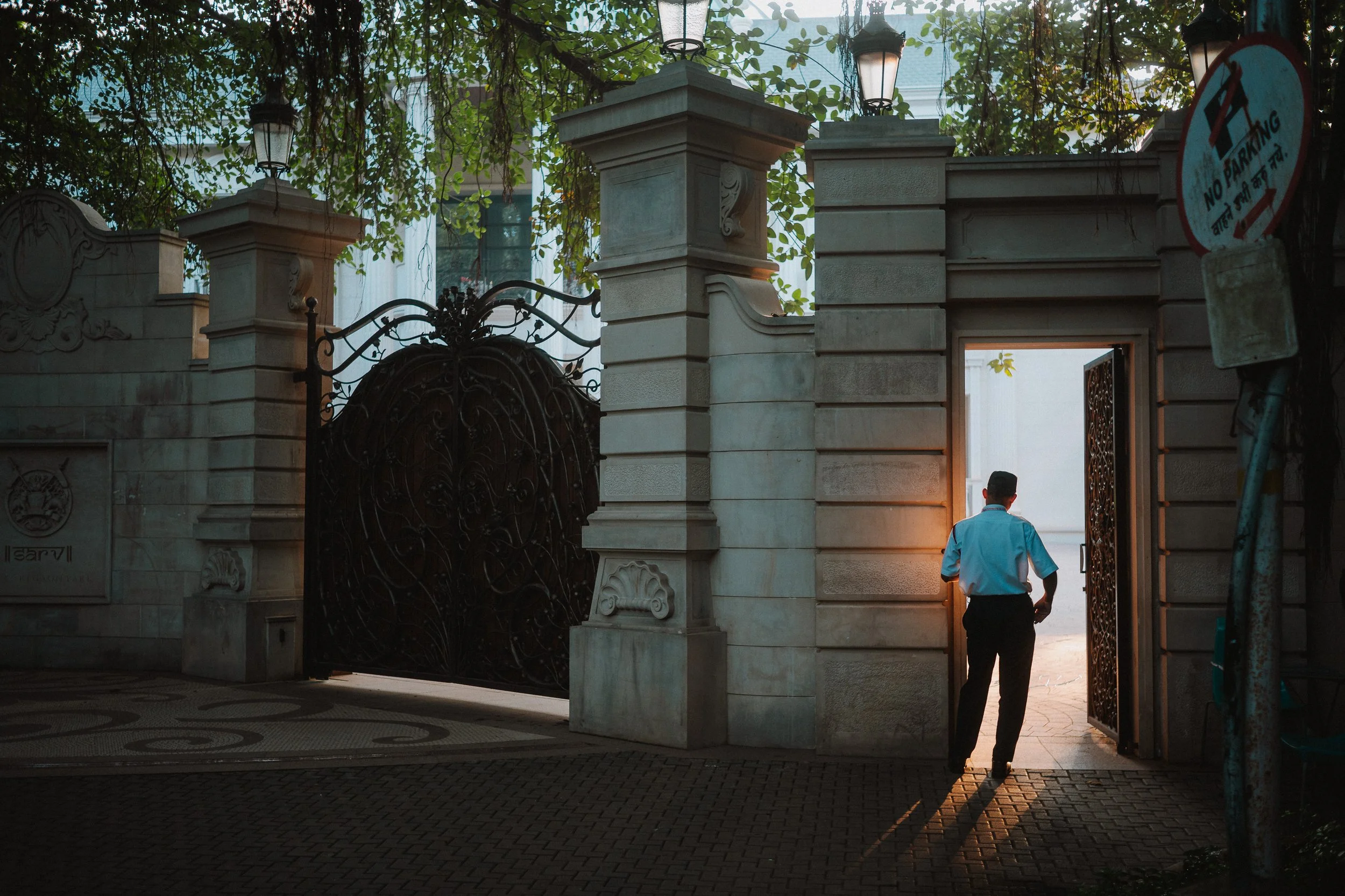
A Villa in Koregaon Park
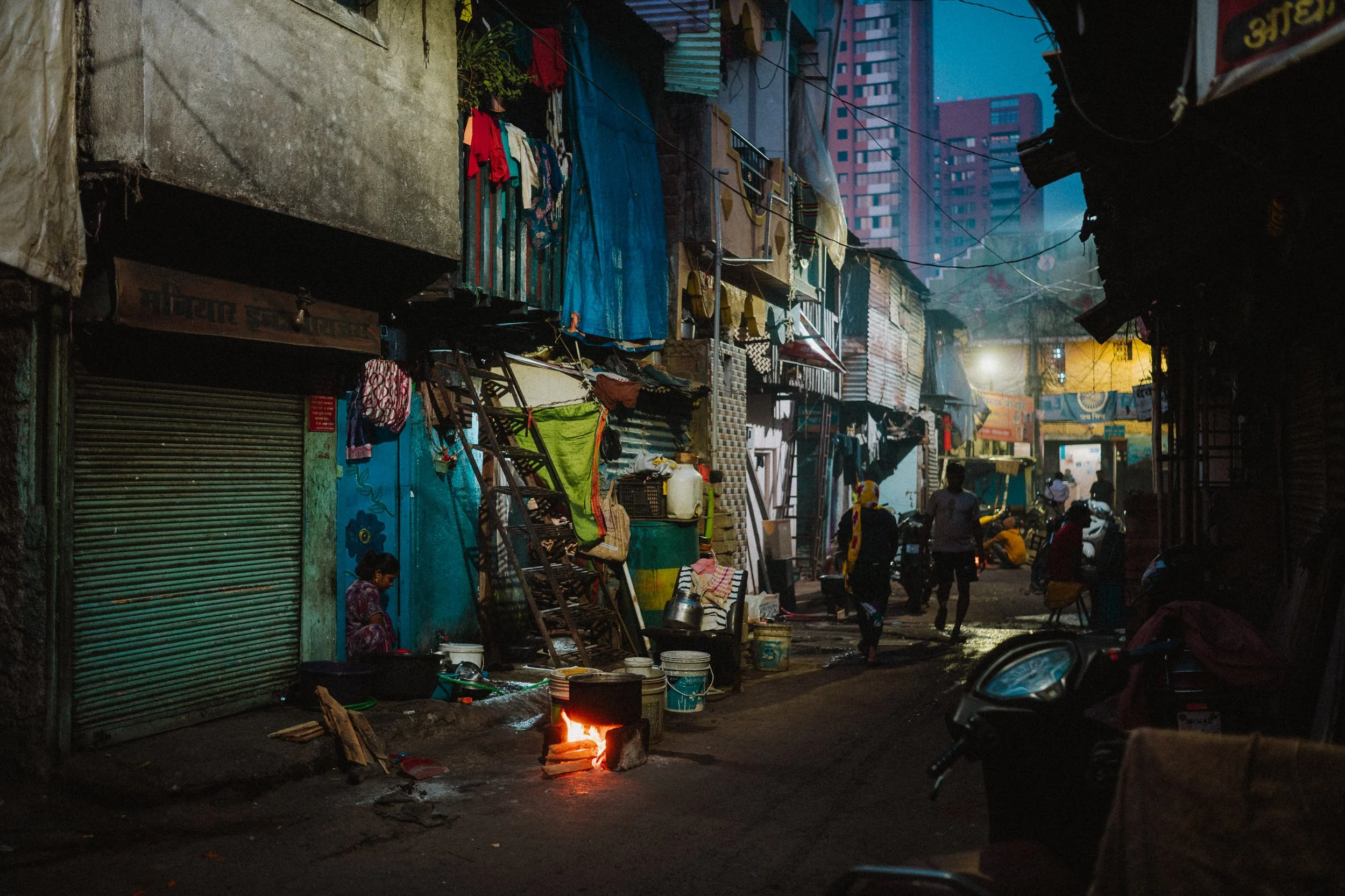
A Street in Gultekadi
Inequality is not just a symptom of a developing nation; it’s the central pillar of modern-day India. Casteism and hierarchical thinking dominate most interactions.
That said, there are still many things in India that I love. I love many places that I visited. I love people that I met here. Connections that will stay for the rest of my life. But I love all these things in spite of India. The credit does not go to India.I no longer think of India simply as a destination on my bucket list. “India” is a government, a social construct. It is a lottery depending on the majority of people losing. The simplified romance is gone.
I reached basically the same perspective I have about my own home country. I would never say “I love Germany”. In fact, the German government doesn’t really care about equality either. But we managed to outsource a lot of the ugliness to places like India, so it’s much easier to be on the winning side of the birth lottery. You can simply read about social and economic issues around the world and escape from it once you’ve had enough and do some moral grandstanding to make yourself feel better. But in India there is no avoiding this reality.
Back to Bob
Which leads me back to Bob the cat that got lost. I remember that on my first visit I saw a missing cat sign also. It said “FIND LOST CAT - Rs. 50,000/- Reward or iPhone”. The sentence alone made it a bit ridiculous, and it might just have been another scam, but I thought, “How amazing that in a place like India, where life is so difficult already, people can still love a cat that much that they would pay multiple monthly incomes of some people to get it back”.
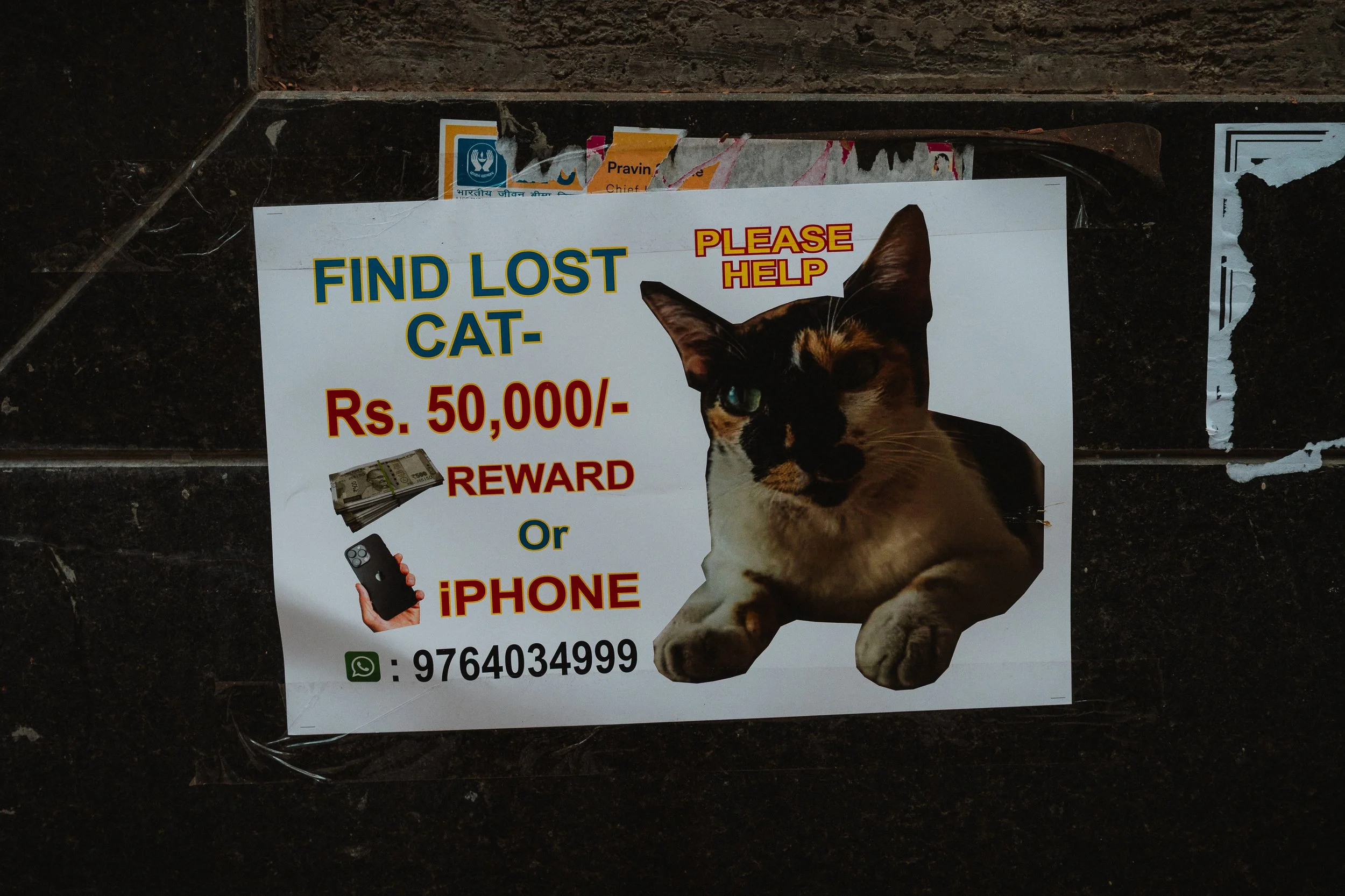
While this thought sounds infantile to me now, it still shows how much has changed since then. Now, when I saw the picture of Bob, it filled me with darkness immediately. I was sure he would not come back; I was sure he was dead already. I didn’t feel any hope for his return, and I stopped looking for him when going past his society. “Maybe he was killed for fun by some asshole in his rented Ferrari while speeding through Koregaon Park,” is what I thought instead.
Is that thought fair? Not really. But it is what the general lovelessness and low value placed on life, which I witness every day here, have caused within me. It made me think that India is not a safe place to become emotionally invested in, because with a flip of a coin, everything and everyone that I love here could be gone. The possible loss of a cat that I had petted only a couple of times made me want to run away.
Maybe I had gone from making excuses to expecting the worst. Maybe I need some distance to process these things that I didn’t just read about but also experienced firsthand.
What I learned from living outside my home country for the first time is that the romantic excitement I get from travelling is a luxury of the ones who are just passing through.